
Monday, May 27, 2013


Friday, May 24, 2013
Roses Cake pops for Therese - the little flower!

First, please forgive my pictures! They were taken with my phone :-) This was the bouquet I made for a Carmelite benefit dinner. It's made of cake pops! I'm sure you have heard about them; they are so delicious and so fun to make, and always a big hit.
So here is what you will need:
Cake pop recipe (you can find one anywhere - there are some tips though that I will write on the bottom of the post);
Mini-rose silicone mold- (mine is from ebay);
Candy melts;
Paramount crystal (if you use Wilton's candy melts);
Lollipop sticks;
Toothpick.
Make your cake pops according to the recipe you find the best, shape the balls like a tear drop, making sure the cake balls are smaller than the silicone mold otherwise the cake will break when you try to take out the mold. Chill them.
Melt you candy melts (I prefer double-boil but you can use a microwave). Fill the silicone mold up to 2/3 only (actually it may depend on the size of your cake balls). Put the round side of the cake balls inside of the mold making sure there is no candy dripping over the mold, which would make hard to get out. If some candy starts coming out on the sides just gently clean it off using a toothpick - do not press the side of the mold.

After that, put them in a refrigerator to speed the process of drying. It does not take too long. It should come out really easily from the mold, use a toothpick to pull the mold up, gently, pushing it against the mold, not the cake.

Dip the bottom side of the rose into the melted candy - you may hold with your hands the rose side - stick the lollipop sticks inside of the cake pop, shake the excess of candy and put in the styrofoam to dry.

I made tags with famous quotes of St.Therese and turned into a bouquet using a vase from Ikea.

Here it is! Next time, I will add some edible leaves.

I really like it! And it could be made in red for St. Rita of Cascia or Our Lady!
***************
Here are some tips to make your cake pop making more fun!
- do not use oil for baking, if the recipe calls for oil replace it with butter (not margarine), the cake will be firmer, not falling off the sticks when dipping and not having oil coming out trough the cake pops later either;
- make your own frosting! It does not take too long, it tastes better, it will no be too sweet and also will not fall off the sticks when dipping because of the butter;
- do not put too much frosting into the crumbled cake before kneading it thoroughly and molding it into balls - I have found that 3 to 4 tablespoons are more than enough.


Sunday, May 19, 2013
When does Easter end?

Pentecost Sunday
156. Eastertide concludes with Pentecost Sunday, the fiftieth day,
and its commemoration of the outpouring of the Holy Spirit on the apostles (cf.
Acts 2, 1-4), the Church's foundation, and the beginning of its mission to all
nations and peoples. The protracted celebration of the vigil Mass has a
particular importance in cathedrals and some parishes, since it reflects the
intense persevering prayer of the Christian community in imitation of the
Apostles united in prayer with Mother of Jesus(160).
The mystery of Pentecost exhorts us to prayer and commitment to
mission and enlightens popular piety which is a "continued sign of the presence
of the Holy Spirit in the Church. He arouses faith, hope and charity, in the
hearts [of the faithful] and those ecclesial virtues which make popular piety
valuable. The same Spirit ennobles the numerous and varied ways of transmitting
the Christian message according to the culture and customs of all times and
places"(161).
The faithful are well used to invoking the Holy Spirit especially
when initiating new undertakings or works or in times of particular
difficulties. Often they use formulas taken from the celebration of Pentecost
(Veni Creator Spiritus, Veni Sancte Spiritus)(162) or short prayers of
supplication (Emitte Spiritum tuum et creabuntur). The third glorious
mystery of the Rosary invites the faithful to meditate on the outpouring of the
Holy Spirit. In Confirmation they are conscious of receiving the Spirit of
wisdom and counsel to guide and assist them; the Spirit of strength and light to
help them make important decisions and to sustain the trials of life. The
faithful are also aware that through Baptism their bodies become temples of the
Holy Spirit to be respected and honoured, even in death, and they know that the
body will be raised up on the last day through the power of the Holy Spirit.
While the Holy Spirit gives access to communion with God in
prayer, he also prompts us towards service of our neighbour by encountering him,
by reconciliation, by witness, by a desire for justice and peace, by renewal of
outlook, by social progress and missionary commitment(163). In some Christian
communities, Pentecost is celebrated as a "day of intercession for the
missions"(164).
Source:Directory on Popular Piety
Wednesday, May 1, 2013
Marian Months
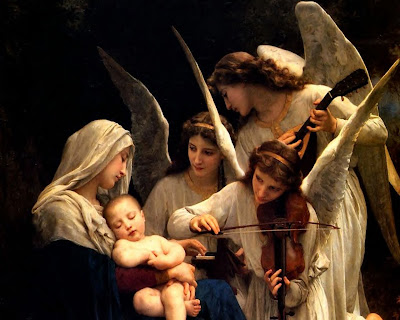
190. With regard to the observance of "Marian months", which is
widespread in the Latin and Oriental Churches(223), a number of essential points
can be mentioned(224).
In the West, the practise of observing months dedicated to the
Blessed Virgin emerged from a context in which the Liturgy was not always
regarded as the normative form of Christian worship. This caused, and continues
to cause, some difficulties at a liturgico-pastoral level that should be
carefully examined.
191. In relation to the western custom of observing a "Marian
month" during the month of May (or in November in some parts of the Southern
hemisphere), it would seem opportune to take into account the demands of the
Liturgy, the expectations of the faithful, their maturity in the faith, in an
eventual study of the problems deriving from the "Marian months" in the overall
pastoral activity of the local Church, as might happen, for example, with any
suggestion of abolishing the Marian observances during the month of May.
In many cases, the solution for such problems would seem to lay in
harmonizing the content of the "Marian months" with the concomitant season of
the Liturgical Year. For example, since the month of May largely corresponds
with the fifty days of Easter, the pious exercises practised at this time could
emphasize Our Lady's participation in the Paschal mystery (cf. John 19, 25-27),
and the Pentecost event (cf, Acts 1, 14) with which the Church begins: Our Lady
journeys with the Church having shared in the novum of the Resurrection, under
the guidance of the Holy Spirit. The fifty days are also a time for the
celebration of the sacraments of Christian initiation and of the mystagogy. The
pious exercises connected with the month of May could easily highlight the
earthly role played by the glorified Queen of Heaven, here and now, in the
celebration of the Sacraments of Baptism, Confirmation and Holy
Eucharist(225).
The directives of Sacrosanctum
Concilium on the need to orient the "minds of the faithful...firstly to
the feasts of the Lord, in which, the mysteries of salvation are celebrated
during the year"(226), and with which the Blessed Virgin Mary is certainly
associated, should be closely followed.
Opportune catechesis should remind the faithful that the weekly
Sunday memorial of the Paschal Mystery is "the primordial feast day". Bearing in
mind that the four weeks of Advent are an example of a Marian time that has been
incorporated harmoniously into the Liturgical Year, the faithful should be
assisted in coming to a full appreciation of the numerous references to the
Mother of our Saviour during this particular period.
Source: Directory on Popular Piety
Sunday, April 7, 2013
Eastertide

The Annual Blessing of Family Homes
152. The annual blessing of families takes places in their homes
during Eastertide - or at other times of the year. This pastoral practice is
highly recommended to parish priests and to their assistant priests since it is
greatly appreciated by the faithful and affords a precious occasion to recollect
God's constant presence among Christian families. It is also an opportunity to
invite the faithful to live according to the Gospel, and to exhort parents and
children to preserve and promote the mystery of being "a domestic
church"(156).
The Via Lucis
153. A pious exercise called the Via Lucis has developed
and spread to many regions in recent years. Following the model of the Via
Crucis, the faithful process while meditating on the various appearances of
Jesus - from his Resurrection to his Ascension - in which he showed his glory to
the disciples who awaited the coming of the Holy Spirit (cf. John 14, 26; 16,
13-15; Lk 24, 49), strengthened their faith, brought to completion his teaching
on the Kingdom and more closely defined the sacramental and hierarchical
structure of the Church.
Through the Via Lucis, the faithful recall the central
event of the faith - the resurrection of Christ - and their discipleship in
virtue of Baptism, the paschal sacrament by which they have passed from the
darkness of sin to the bright radiance of the light of grace (cf. Col 1, 13; Ef
5, 8).
For centuries the Via Crucis involved the faithful in the
first moment of the Easter event, namely the Passion, and helped to fixed its
most important aspects in their consciousness. Analogously, the Via
Lucis, when celebrated in fidelity to the Gospel text, can effectively
convey a living understanding to the faithful of the second moment of the Pascal
event, namely the Lord's Resurrection.
The Via Lucis is potentially an excellent pedagogy of the
faith, since "per crucem ad lucem". Using the metaphor of a journey, the Via
Lucis moves from the experience of suffering, which in God's plan is part of
life, to the hope of arriving at man's true end: liberation, joy and peace which
are essentially paschal values.
The Via Lucis is a potential stimulus for the restoration
of a "culture of life" which is open to the hope and certitude offered by faith,
in a society often characterized by a "culture of death", despair and nihilism.
Devotion to the Divine Mercy
154. In connection with the octave of Easter, recent years have
witnessed the development and diffusion of a special devotion to the Divine
Mercy based on the writings of Sr. Faustina Kowalska who was canonized 30 April
2000. It concentrates on the mercy poured forth in Christ's death and
resurrection, fount of the Holy Spirit who forgives sins and restores joy at
having been redeemed. Since the liturgy of the Second Sunday of Easter or Divine
Mercy Sunday - as it is now called(157) - is the natural locus in which to
express man's acceptance of the Redeemer's mercy, the faithful should be taught
to understand this devotion in the light of the liturgical celebrations of these
Easter days. Indeed, "the paschal Christ is the definitive incarnation of mercy,
his living sign which is both historico-salvific and eschatological. At the same
time, the Easter liturgy places the words of the psalm on our lips: "I shall
sing forever of the Lord's mercy" (Ps 89[88] 2)"(158).
The Pentecost Novena
155. The New Testament tells us that during the period between the
Ascension and Pentecost "all...joined in continuous prayer, together with
several women, including Mary the mother of Jesus, and with his brothers" (Acts
1, 14) while they awaited being "clothed with the power from on high" (Lk 24,
49). The pious exercise of the Pentecost novena, widely practised among the
faithful, emerged from prayerful reflection on this salvific event.
Indeed, this novena is already present in the Missal and in the
Liturgy of the Hours, especially in the second vespers of Pentecost: the
biblical and eucological texts, in different ways, recall the disciples'
expectation of the Paraclete. Where possible, the Pentecost novena should
consist of the solemn celebration of vespers. Where such is not possible, the
novena should try to reflect the liturgical themes of the days from Ascension to
the Vigil of Pentecost.
In some places, the week of prayer for the unity Christians is
celebrated at this time(159).
Source: Directory on Popular Piety
Sunday, March 31, 2013
Easter! Christus Resurrexit!

Easter Sunday
148. Easter Sunday, the greatest solemnity in the liturgical year,
is often associated with many displays of popular piety: these are all cultic
expressions which proclaim the new and glorious condition of the risen Christ,
and the divine power released from his triumph over sin and death.
The Risen Christ meets his Mother
149. Popular piety intuits a constancy in the relationship between
Christ and his mother: in suffering and death and in the joy of the
resurrection.
The liturgical affirmation that God replenished the Blessed Virgin
Mary with joy in the resurrection of her Son(153), has been translated and
represented, so as to speak, in the pious exercise of the meeting of the
Risen Christ with His Mother: on Easter morning two processions, one bearing
the image of Our Lady of Dolours, the other that of the Risen Christ, meet each
other so as to show that Our Lady was the first, and full participant in the
mystery of the Lord's resurrection.
What has already been said in relation to the processions of "the
dead Christ" also applies to this pious exercise: the observance of the pious
exercise should not acquire greater importance than the liturgical celebration
of Easter Sunday nor occasion inappropriate mixing of liturgical expressions
with those of popular piety(154).
Blessing of the Family Table
150. The Easter liturgy is permeated by a sense of newness: nature
has been renewed, since Easter coincides with Spring in the Northern hemisphere;
fire and water have been renewed; Christian hearts have been renewed through the
Sacrament of Penance, and, where possible, through administration of the
Sacraments of Christian initiation; the Eucharist is renewed, so as to speak:
these are signs and sign-realities of the new life begun by Christ in the
resurrection.
Among the pious exercises connected with Easter Sunday, mention
must be made of the traditional blessing of eggs, the symbol of life, and the
blessing of the family table; this latter, which is a daily habit in many
Christian families that should be encouraged(155), is particularly important on
Easter Sunday: the head of the household or some other member of the household,
blesses the festive meal with Easter water which is brought by the faithful from
the Easter Vigil.
Visit to the Mother of the Risen Christ
151. At the conclusion of the Easter Vigil, or following the
Second Vespers of Easter, a short pious exercise is kept in many places: flowers
are blessed and distributed to the faithful as a sign of Easter joy. Some are
brought to the image of Our Lady of Dolours, which is then crowned, as the
Regina Coeli is sung. The faithful, having associated themselves with the
sorrows of the Blessed Virgin in the Lord's Passion and Death, now rejoice with
her in His resurrection.
While this pious exercise should not be incorporated into the
liturgical action, it is completely in harmony with the content of the Paschal
Mystery and is a further example of the manner in which popular piety grasps the
Blessed Virgin Mary's association with the saving work of her Son.
Source: Directory on Popular Piety
Wednesday, March 27, 2013
How to spend Holy Week?

The Paschal Triduum
140. Every year, the Church celebrates the great mysteries of the
redemption of mankind in the "most sacred triduum of the crucifixion, burial and
resurrection"(143). The Sacred Triduum extends from the Mass of the Lord's
Supper to Vespers on Easter Sunday and is celebrated "in intimate communion with
Christ her Spouse"(144).
Holy Thursday
Visiting the Altar of Repose
141. Popular piety is particularly sensitive to the adoration of
the Most Blessed Sacrament in the wake of the Mass of the Lord's supper(145).
Because of a long historical process, whose origins are not entirely clear, the
place of repose has traditionally been referred to as a "a holy sepulchre". The
faithful go there to venerate Jesus who was placed in a tomb following the
crucifixion and in which he remained for some forty hours.
It is necessary to instruct the faithful on the meaning of the
reposition: it is an austere solemn conservation of the Body of Christ for the
community of the faithful which takes part in the liturgy of Good Friday and for
the viaticum of the infirmed(146). It is an invitation to silent and prolonged
adoration of the wondrous sacrament instituted by Jesus on this day.
In reference to the altar of repose, therefore, the term
"sepulchre" should be avoided, and its decoration should not have any suggestion
of a tomb. The tabernacle on this altar should not be in the form of a tomb or
funerary urn. The Blessed Sacrament should be conserved in a closed tabernacle
and should not be exposed in a monstrance(147).
After mid-night on Holy Thursday, the adoration should conclude
without solemnity, since the day of the Lord's Passion has already
begun(148).
Good Friday
Good Friday Procession
142. The Church celebrates the redemptive death of Christ on Good
Friday. The Church meditates on the Lord's Passion in the afternoon liturgical
action, in which she prays for the salvation of the word, adores the Cross and
commemorates her very origin in the sacred wound in Christ's side (cf. John 19,
34)(149).
In addition to the various forms of popular piety on Good Friday
such as the Via Crucis, the passion processions are undoubtedly the most
important. These correspond, after the fashion of popular piety, to the small
procession of friends and disciples who, having taken the body of Jesus down
from the Cross, carried it to the place where there "was a tomb hewn in the rock
in which no one had yet been buried" (Lk 23, 53).
The procession of the "dead Christ" is usually conducted in
austere silence, prayer, and the participation of many of the faithful, who
intuit much of the significance of the Lord's burial.
143. It is necessary, however, to ensure that such manifestations
of popular piety, either by time or the manner in which the faithful are
convoked, do not become a surrogate for the liturgical celebrations of Good
Friday.
In the pastoral planning of Good Friday primary attention and
maximum importance must be given to the solemn liturgical action and the
faithful must be brought to realize that no other exercise can objectively
substitute for this liturgical celebration.
Finally, the integration of the "dead Christ" procession with the
solemn liturgical action of Good Friday should be avoided for such would
constitute a distorted celebrative hybrid.
Passion Plays
144. In many countries, passion plays take place during Holy Week,
especially on Good Friday. These are often "sacred representations"which can
justly be regarded as pious exercises. Indeed, such sacred representations have
their origins in the Sacred Liturgy. Some of these plays, which began in the
monks' choir, so as to speak, have undergone a progressive dramatisation that
has taken them outside of the church.
In some places, responsibility for the representations of the
Lord's passion has been given over to the Confraternities, whose members have
assumed particular responsibilities to live the Christian life. In such
representations, actors and spectators are involved in a movement of faith and
genuine piety. It is singularly important to ensure that representations of the
Lord's Passion do not deviate from this pure line of sincere and gratuitous
piety, or take on the characteristics of folk productions, which are not so much
manifestations of piety as tourist attractions.
In relation to sacred "representations" it is important to
instruct the faithful on the difference between a "representation" which is
commemorative, and the "liturgical actions" which are anamnesis, or mysterious
presence of the redemptive event of the Passion.
Penitential practices leading to self-crucifixion with nails are
not to be encouraged.
Our Lady of Dolours
145. Because of its doctrinal and pastoral importance, it is
recommended that "the memorial of Our Lady of Dolours"(150) should be recalled.
Popular piety, following the Gospel account, emphasizes the association of Mary
with the saving Passion her Son (cf, John 19, 25-27; Lk 2, 34f), and has given
rise to many pious exercises, including:
- the Planctus Mariae, an intense expression of sorrow, often accompanied by literary or musical pieces of a very high quality, in which Our Lady cries not only for the death of her Son, the Innocent, Holy, and Good One, but also for the errors of his people and the sins of mankind;
- the Ora della Desolata, in which the faithful devoutly keep vigil with the Mother of Our Lord, in her abandonment and profound sorrow following the death of her only Son; they contemplate Our Lady as she receives the dead body of Christ (the Pietà) realizing that the sorrow of the world for the Lord's death finds expression in Mary; in her they behold the personification of all mothers throughout the ages who have mourned the loss of a son. This pious exercise, which in some parts of Latin America is called El Pésame, should not be limited merely to the expression of emotion before a sorrowing mother. Rather, with faith in the resurrection, it should assist in understanding the greatness of Christ's redemptive love and his Mother's participation in it.
Holy Saturday
146. "On Holy Saturday, the Church pauses at the Lord's tomb,
meditating his Passion and Death, his descent into Hell, and, with prayer and
fasting, awaits his resurrection"(151).
Popular piety should not be impervious to the peculiar character
of Holy Saturday. The festive customs and practices connected with this day, on
which the celebration of the Lord's resurrection was once anticipated, should be
reserved for the vigil and for Easter Sunday.
The "Ora della Madre"
147. According to tradition, the entire body of the Church is
represented in Mary: she is the "credentium collectio universa"(152). Thus, the
Blessed Virgin Mary, as she waits near the Lord's tomb, as she is represented in
Christian tradition, is an icon of the Virgin Church keeping vigil at the tomb
of her Spouse while awaiting the celebration of his resurrection.
The pious exercise of the Ora di Maria is inspired by this
intuition of the relationship between the Virgin Mary and the Church: while the
body of her Son lays in the tomb and his soul has descended to the dead to
announce liberation from the shadow of darkness to his ancestors, the Blessed
Virgin Mary, foreshadowing and representing the Church, awaits, in faith, the
victorious triumph of her Son over death.
Source:Directory on Popular Piety
Subscribe to:
Posts (Atom)